Quick answer: Abrash is a soft shift in shade inside one color of a handmade rug. In most cases, it is a feature, not a flaw. It happens when a weaver moves to a new batch of dyed wool. But not every color change is abrash. Sun fading, stains, and repairs can look alike, and Scottsdale’s strong sun makes that mix-up common.
What Is Abrash in a Rug?
Abrash (say “uh-BRASH”) is a change in tone within a single color. A blue field might look lighter in one band and deeper in the next. A glossary from the Fitzwilliam Museum at the University of Cambridge describes it as color variation caused by uneven dyeing or yarn from a different dye lot.
Most abrash shows up as soft bands that run across the width of the rug. That pattern is your main clue that you are looking at abrash and not damage. Spots, streaks, or halos that follow a design shape usually point to something else.
Why Does Abrash Happen?
Weavers often dyed wool in small batches. Even with the same recipe, two batches rarely match. When one batch ran out, the weaver started the next one, and the shade changed slightly. The Association of Rug Care Specialists lists this as the most common cause.
Rugs are knotted row by row. So each change in yarn appears as a band across the rug.
This is why abrash is common in village and tribal weaving, where wool was often dyed as needed. To see how these rug families differ, read our guide to Persian, Oriental, and tribal rugs.
Is Abrash a Flaw or a Feature?
Usually, it is a feature. Gentle bands give a rug depth and movement. A flat, even color can look lifeless in a large room.
Still, keep two facts in mind:
- Abrash does not prove quality. On its own, it does not prove a rug is handmade, old, or more valuable. Some machine-made rugs copy the look.
- Strong bands are a matter of taste. A bold, high-contrast band can split a rug into two color zones. Some buyers love that look. Others do not.
Origin also matters. Our guide to how Persian, Turkish, and Oriental rugs differ can help you compare styles before you shop.
Abrash vs. Sun Fading in Scottsdale
Scottsdale gets close to 300 sunny days a year. That strong light can fade a rug in uneven patches. Buyers of older rugs often mistake fading for abrash. This table shows the difference.
| Abrash | Sun fading | |
|---|---|---|
| Shape | Soft bands across the rug, in line with the knot rows | Lighter patches near windows or doors |
| Back of rug | Usually shows the same shift | Often closer to the original color |
| Cause | Different dye batches | Light damage over time |
| Meaning | Part of how the rug was made | A condition issue |
Pile direction is another look-alike. Walk around the rug. If the light and dark areas swap as you move, you are seeing pile shading, not abrash.
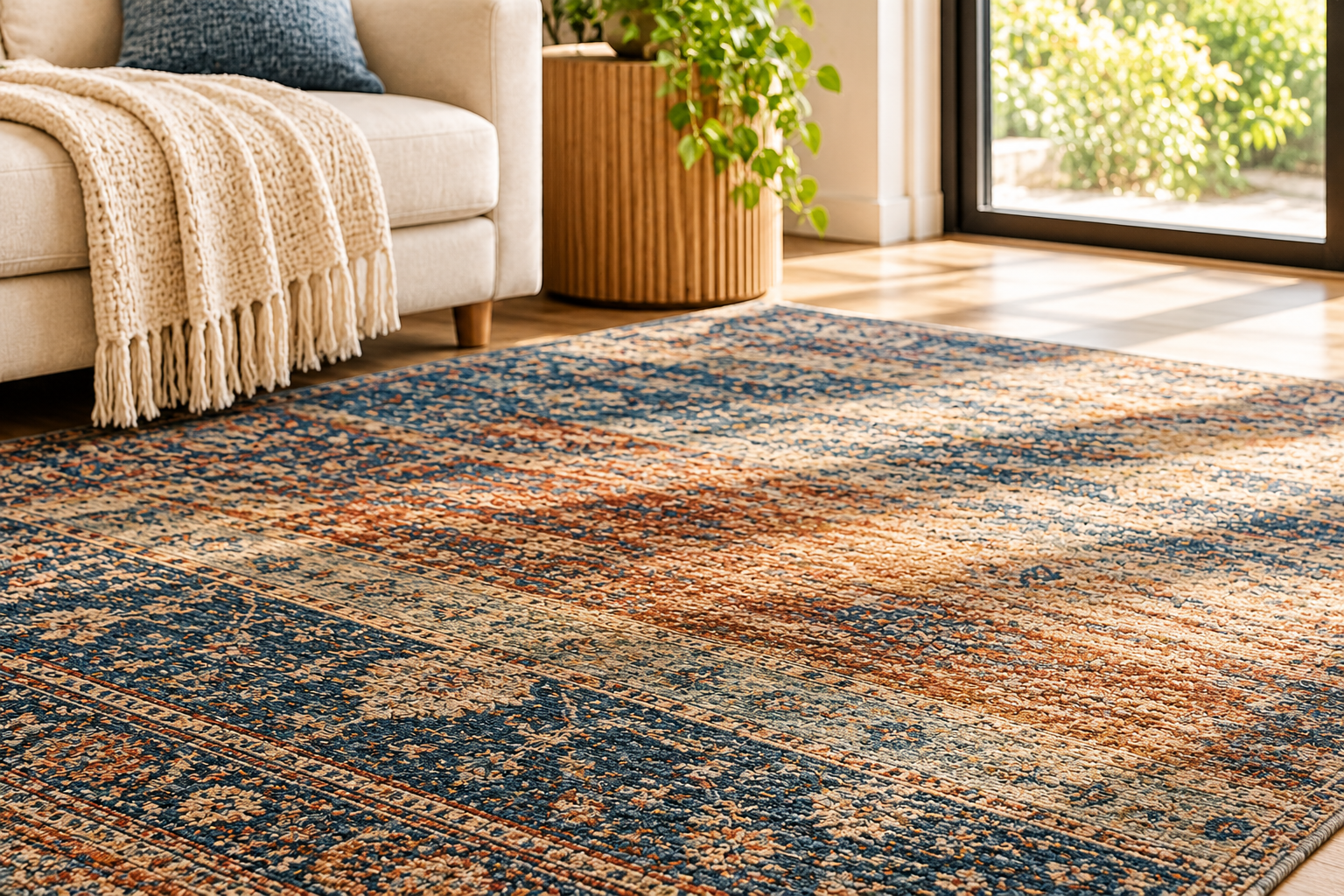
Learn how to distinguish abrash from sun fading in handmade rugs. This visual comparison highlights natural color variations caused by different dye batches and uneven fading caused by sunlight exposure. It also explains how pile direction can change a rug’s appearance when viewed from different angles.
How to Check Abrash Before You Buy
Follow these five steps:
- Flip a corner. Abrash usually shows on both sides of the rug.
- Check the direction. Bands run across the rug. Spots, halos, or irregular patches point to stains or dye bleed.
- Walk around it. This helps you spot pile shading.
- Use daylight. Showroom lights can hide or boost abrash.
- Feel the pile. If a pale area feels thin or worn, it may be wear, not abrash.
Questions to ask the seller:
- Is this abrash, fading, or a repair?
- Is the color band original to the rug?
- Has the rug been re-dyed or chemically washed?
- Can I see it in daylight or in my own home?
A good seller can explain every color change clearly.
Choosing a Rug With Abrash for a Scottsdale Home
Bright desert light changes how abrash looks through the day. Morning light may bring out cooler tones. Afternoon light may warm them. In a dim room, abrash can almost vanish.
Clean-lined, modern rooms are a good match. Soft abrash adds warmth and texture without adding pattern. Be careful with runners, though. Bands across a narrow hallway can look like stripes.
Cleaning can also change what you see. Dirt can hide abrash, so it may look clearer after a professional wash. That is not damage. Harsh cleaning, however, can cause dye bleed, so choose careful rug cleaning and restoration.
The best test is your own room. Alyshaan Fine Rugs offers in-home showings, so you can see selected rugs in your own light and with your own decor. You can also browse our Persian and tribal rugs, or visit our Scottsdale showroom at 15125 Hayden Rd, Ste 110. We are open Monday to Saturday, 10 a.m. to 5 p.m.
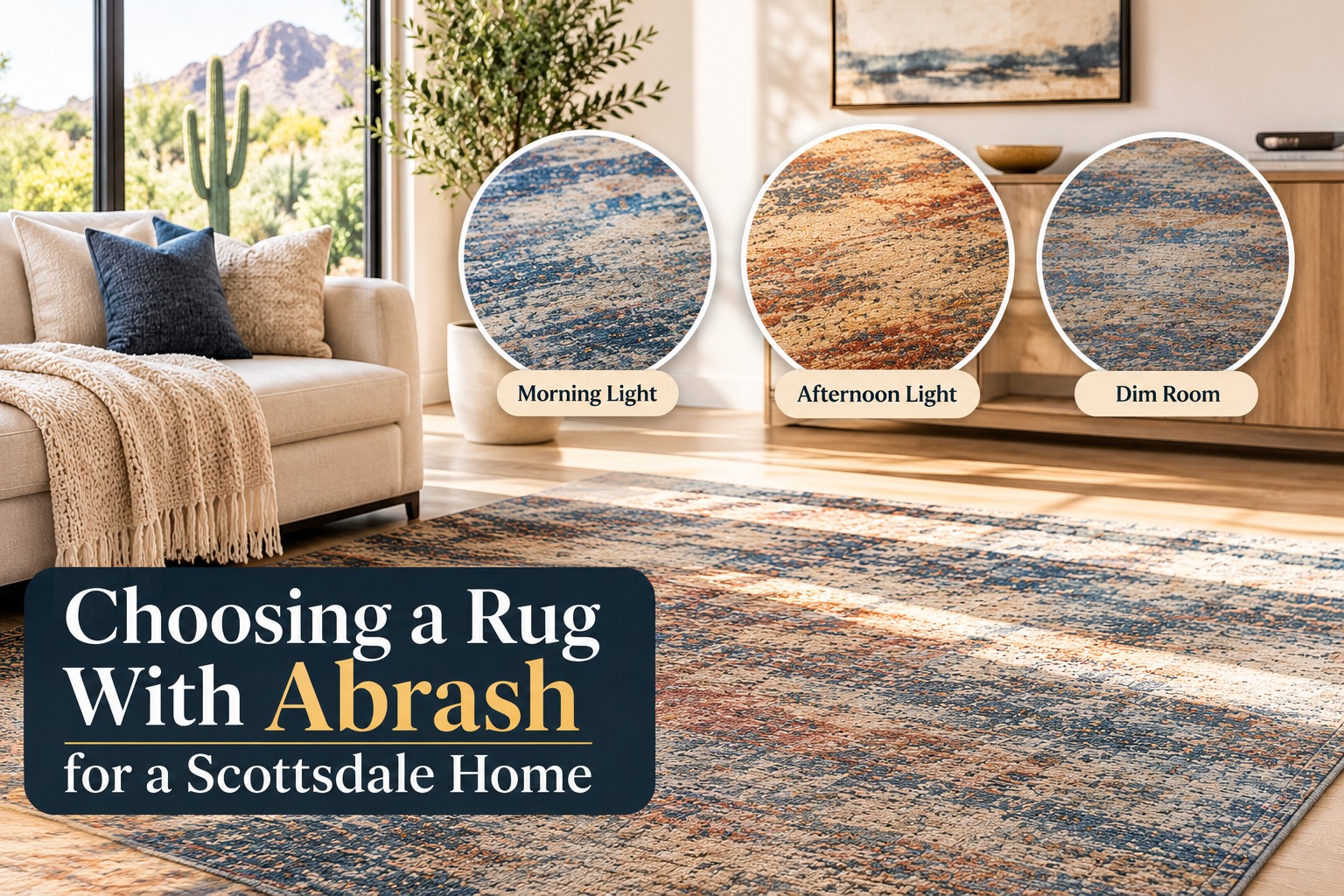
Explore how natural light changes the appearance of abrash in handmade rugs. This Scottsdale-inspired living room showcases blue, beige, and rust tones under different lighting conditions, helping homeowners choose a rug that complements their interior decor.
Final Thoughts
Abrash is usually part of a rug’s character, not a defect. The key is knowing what you are looking at. Check the direction of the color change, look at the back, and view the rug in daylight. Then ask the seller to explain what you see. A clear answer is a good sign. If you want a second opinion, call our team at 480-607-4955.
FAQs About Abrash in Rugs
What is abrash in a rug?
Abrash is a change in shade within one color of a rug, often seen as soft bands across its width. It usually comes from yarn dyed in different batches.
Is abrash a defect?
Usually not. It is a natural result of small-batch dyeing and is often seen as character. But stains, dye bleed, and sun fading are different problems and should be checked.
How can I tell abrash from fading?
Abrash forms bands across the rug and usually shows on the back too. Fading forms uneven patches, often near windows, and mostly affects the top surface.
Does abrash make a rug more valuable?
Not by itself. Value depends on materials, craftsmanship, design, age, and condition. Abrash is one detail to weigh, not a sign of worth.
Can machine-made rugs have abrash?
Yes, in imitation. Some makers copy the look with printed or planned color effects. So abrash alone cannot prove a rug is handmade.
Should I buy a rug with abrash?
Yes, if the bands look soft, even, and part of the weave, and you like the look. Walk away or ask more questions if the color change looks like a stain, a patch, or damage.
Can cleaning remove abrash?
No. Abrash is in the dyed yarn. Cleaning may make it look clearer by removing dirt. Harsh cleaning can cause dye bleed, which is damage.
