

Natural Vs. Synthetic Dyes In Handmade Rugs in Scottsdale, Phoenix, Paradise Valley, Tempe, Mesa, Chandler, Gilbert, Glendale & Fountain Hills, AZ
When buying a handmade rug, color is not the only thing that matters. The type of dye used can also affect its appearance, colorfastness, and environmental impact.
Some rugs use natural dyes made from plants and other natural sources, while others use synthetic dyes produced through chemical processes.
So, which is better: natural or synthetic dyes in rugs?
Natural dyes are popular for their traditional colors and organic appearance. Synthetic dyes offer more color choices and consistent shades. Both can produce beautiful, high-quality rugs when used correctly.
Let’s explore their main differences.
[FEATURED IMAGE – INSERT IMAGE 1 HERE]
What Are Natural Dyes in Handmade Rugs?
Natural dyes come from sources found in nature, including plants, insects, and certain minerals. They have been used for centuries to color wool, silk, and other textile fibers.
Common natural dye sources include:
- Madder root: Produces red and reddish-brown shades.
- Indigo: Creates different shades of blue.
- Cochineal: Produces rich red and crimson colors.
- Turmeric: Provides yellow shades.
- Walnut husks: Create brown and earthy tones.
These dyes are often valued for their traditional character and natural color variations.
The materials used in a rug also influence its appearance and quality. Learn more about the materials used in fine handmade rugs to understand how wool, silk, and cotton contribute to rug construction.
What Are Synthetic Dyes in Handmade Rugs?
Synthetic dyes are made through chemical processes. They became widely used in textile production during the nineteenth century.
Today, they are common in handmade and machine-made rugs.
Their main benefits include:
- A wider range of colors.
- More consistent shades.
- Better control over color production.
- Good resistance to fading with suitable dye formulations.
- Easier reproduction of specific colors.
However, the quality of synthetic dyes can vary depending on their formulation and application.
Natural Vs. Synthetic Dyes: Key Differences
Here is a quick comparison to help you understand both options.
| Feature | Natural Dyes | Synthetic Dyes |
|---|---|---|
| Source | Plants, insects, minerals | Chemical processes |
| Appearance | Often earthy and traditional | Wide range of shades |
| Color consistency | May vary between batches | Usually more consistent |
| Colorfastness | Depends on dye and process | Often very good |
| Environmental impact | Depends on sourcing and processing | Depends on chemicals and wastewater treatment |
| Traditional appeal | Strong | Also used in traditional rugs |
Neither type is automatically better. The final result depends on dye quality, rug material, and the dyeing process.
1. Color and Appearance
Natural dyes often create warm, earthy shades with subtle color variations. These colors can give traditional handmade rugs a unique appearance.
Synthetic dyes offer more control over the final color. They can produce bright, bold, and consistent shades that suit modern interiors.
Which should you choose?
Choose natural dyes if you prefer traditional colors and subtle variations. Synthetic dyes may suit you better if you want specific shades and consistent colors
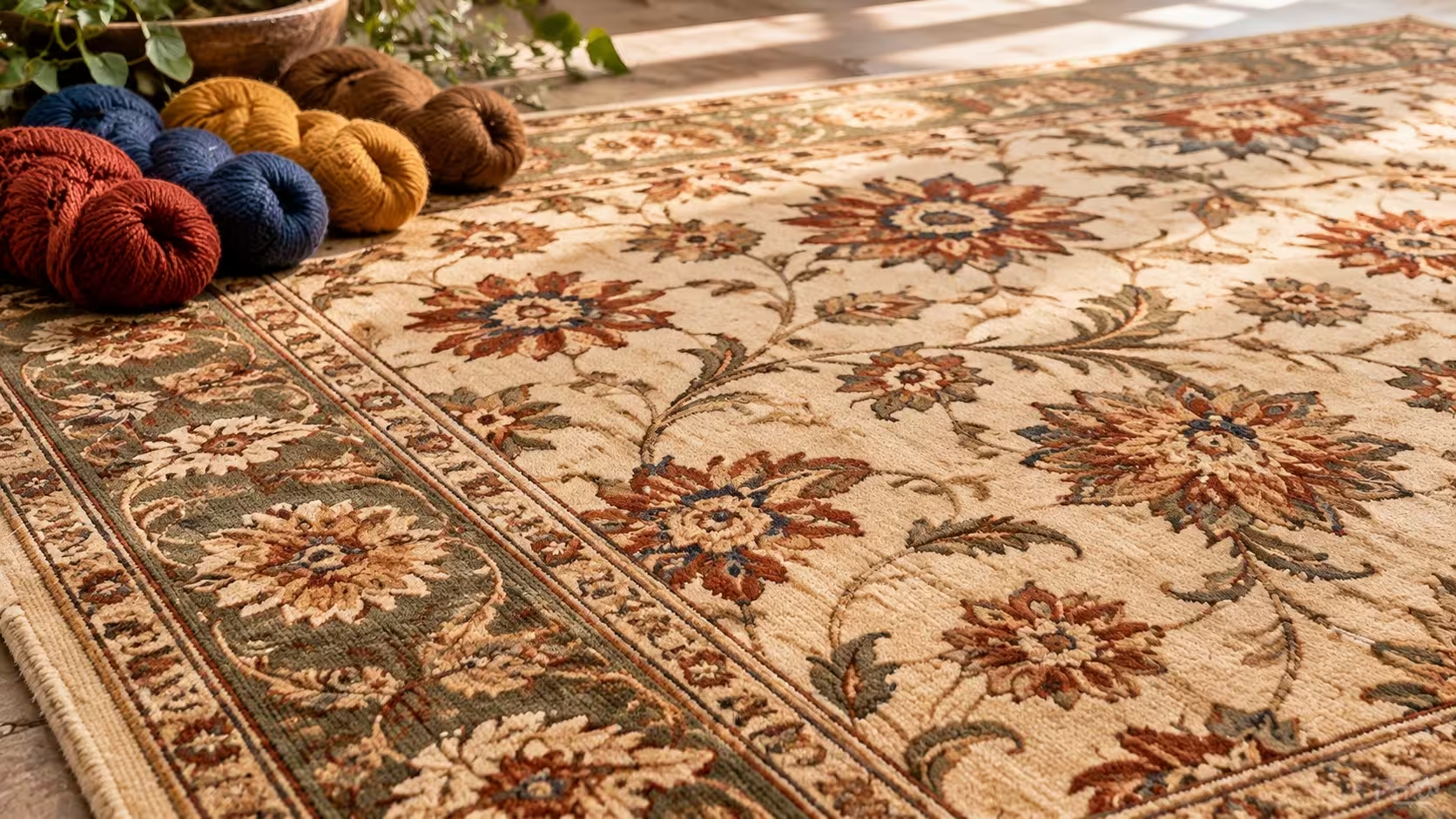
Traditional handmade rug showcasing rich natural colors, intricate floral patterns, and traditional rug craftsmanship.
2. Durability and Fading
Colorfastness means how well a rug’s colors resist fading, bleeding, and rubbing.
Some natural dyes are sensitive to sunlight and may fade over time. However, this depends on the particular dye and how it was applied.
Many modern synthetic dyes offer good colorfastness, but low-quality synthetic dyes can also fade.
Remember that rug durability also depends on the quality of wool or silk, weaving, and proper care.
3. Environmental Impact
Natural dyes are often considered a more environmentally friendly option because many come from renewable sources.
However, natural dyeing can still require water, energy, and chemicals called mordants to help colors attach to fibers.
Synthetic dyeing can produce wastewater containing chemicals and salts. Proper wastewater treatment is important to reduce environmental harm.
If sustainability is important to you, explore the benefits of choosing eco-friendly rugs to learn more about sustainable materials and responsible rug choices.
Are natural dyes always better for the environment?
No. The environmental impact depends on how the dyes are produced, which materials are used, and how waste is managed.
4. Do Natural Dyes Increase Rug Value?
Natural dyes can add appeal to traditional and antique handmade rugs. Some collectors appreciate their connection to historical dyeing methods.
However, natural dyes do not automatically make a rug more valuable.
Other important factors include:
- Wool or silk quality.
- Hand-knotting and craftsmanship.
- Design and pattern.
- Age and condition.
- Origin and rarity.
A high-quality handmade rug can also use synthetic dyes and still be valuable.
5. How Can You Identify Natural and Synthetic Dyes?
It is not always possible to identify dye types by looking at a rug.
Here are a few useful steps:
- Ask the seller: Find out whether natural or synthetic dyes were used.
- Check the documentation: Look for information about the rug’s materials, origin, and dyeing process.
- Observe color variations: Different shades may appear across handmade rugs, but this does not prove that natural dyes were used.
- Consider professional testing: Specialist testing can help identify certain dyes when confirmation is important.
Always ask for reliable information rather than judging a rug by its colors alone.
6. How to Protect Your Rug’s Colors
Both natural and synthetic dyes need proper care to maintain their appearance.
Follow these simple tips:
- Keep your rug away from strong, direct sunlight.
- Rotate it regularly to distribute wear and light exposure.
- Vacuum gently using a suitable setting.
- Blot spills instead of rubbing them.
- Avoid harsh household cleaning products.
- Use professional cleaning services for valuable handmade rugs.
For expert care, explore Alyshaan’s rug cleaning and restoration services.
[ARTICLE IMAGE 2 – INSERT IMAGE 3 HERE]
7. Which Type of Dye Should You Choose?
The right choice depends on your preferences and how you plan to use the rug.
Choose natural dyes if you:
- Prefer traditional and earthy colors.
- Appreciate natural color variations.
- Value traditional dyeing methods.
Choose synthetic dyes if you:
- Want a wider choice of colors.
- Prefer consistent shades.
- Need specific colors for your interior design.
If you want a personalized rug, explore Alyshaan’s custom rug design service to discuss your preferred colors, materials, and styles.
Conclusion
Natural and synthetic dyes both have advantages in handmade rug production.
Natural dyes offer traditional beauty and distinctive colors, while synthetic dyes provide greater color control and consistent results.
Neither option is always better. What matters most is the quality of the dyes, rug materials, and craftsmanship.
When choosing a handmade rug, consider its construction, colorfastness, design, and care requirements. A well-made rug can remain beautiful for many years, regardless of which type of dye is used.
Frequently Asked Questions
1. Are natural dyes better than synthetic dyes in rugs?
Natural dyes offer traditional colors, while synthetic dyes provide more consistent shades. Both can produce high-quality rugs when applied properly.
2. Do natural dyes fade faster?
Some natural dyes are sensitive to sunlight. However, fading depends on the specific dye, fiber, and dyeing process.
3. Are synthetic dyes harmful?
Some synthetic dyeing processes can create harmful wastewater if chemicals are not managed properly. Responsible processing and wastewater treatment can reduce environmental impact.
4. What natural dyes are used in handmade rugs?
Common sources include madder root, indigo, cochineal, turmeric, and walnut husks.
5. Can handmade rugs use synthetic dyes?
Yes. Genuine hand-knotted rugs can use natural or synthetic dyes. The dye type does not determine whether a rug is handmade.
6. How can I protect rug colors from fading?
Keep rugs away from strong sunlight, vacuum gently, clean spills carefully, and use professional rug cleaning when needed.
